As an Amazon Associate, we earn from qualifying purchases. Some links may be affiliate links at no extra cost to you. Although our opinions are based on curated research, we haven't used these products. Articles generated with AI.

Top Allergens in “Natural” Beauty Products Revealed

Those “all-natural” beauty products you’re using might not be as gentle as you think. Research shows that 94% of natural cosmetics contain at least one allergenic ingredient, with essential oils and botanical extracts being major culprits. Common offenders include limonene, eugenol, and fragrances, which appear in over 37% of products. You’ll want to patch test new items and examine labels carefully – there’s a lot more beneath that “natural” label than meets the eye.
Key Takeaways
- Essential oils and fragrances are present in 94% of natural beauty products and rank among the most common allergens.
- Limonene, eugenol, and hexyl cinnamal frequently appear in natural products as hidden allergens within botanical ingredients.
- Natural preservatives like methylisothiazolinone can trigger significant allergic reactions despite their plant-based origins.
- Chamomile, lavender, and tea tree oil commonly cause skin sensitivities despite their reputation as soothing ingredients.
- Fragrances, found in 37% of natural products, are leading irritants even when derived from natural sources.
Understanding Common Plant-Based Allergens in Cosmetics
You may be interested

While natural beauty products often seem like the safer choice, they’re not always as gentle as you might think. In fact, you’ll find that many common allergens lurk in those ingredient lists, especially when it comes to essential oils and botanical extracts like chamomile, lavender, and tea tree oil.
If you’re diving into natural skincare, you should know that over 94% of these products contain at least one ingredient that could trigger allergic reactions. That’s right – your supposedly gentle face oil might be behind that contact dermatitis you’ve been battling. Popular ingredients like limonene, eugenol, and hexyl cinnamal are frequent offenders. What’s more concerning is that fragrances, found in nearly 37% of natural products, top the list of irritants. It’s vital to patch test new products, even if they’re marketed as all-natural.
The Hidden Risks of Essential Oils and Fragrances
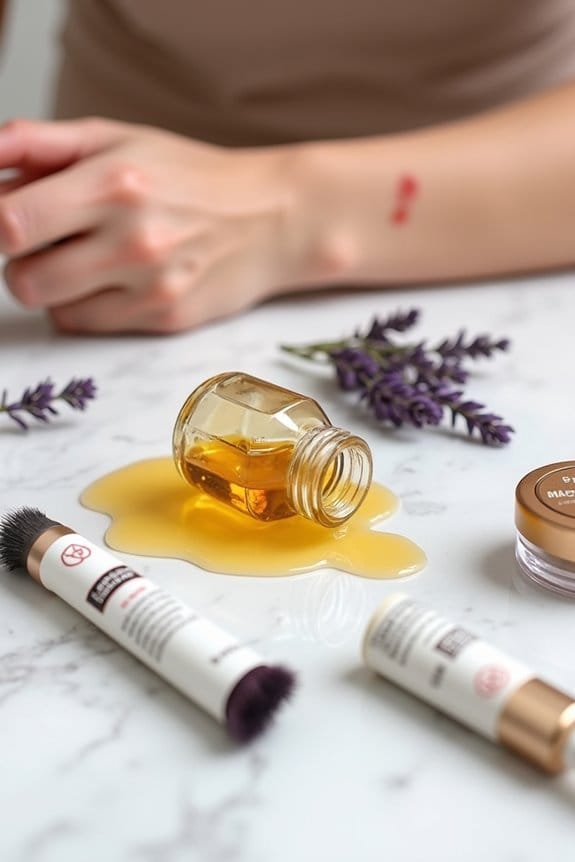
Although essential oils and fragrances are often touted as natural beauty powerhouses, they’re not always your skin’s best friend. In fact, these ingredients appear in over 94% of natural personal care products and can trigger allergic contact dermatitis in many users. Common culprits like limonene, eugenol, and hexyl cinnamal lurk in more than a third of natural beauty formulations.
If you’ve got sensitive skin, you’ll want to be extra cautious. Your skin can develop sensitivities to essential oils over time, even if you’ve never had issues before. That’s why it’s important to do patch testing before diving into any new product. Consider going fragrance-free if you notice redness or irritation. Remember, just because something’s natural doesn’t mean it’s hypoallergenic – your skin might thank you for being more selective with your product choices.
Recommended Products

New look, same great formula; packaging may vary

Deep Hydration & Nourishment: The Cream face moisturizer offers deep hydration, reducing the appearance of fine lines and wrinkles while restoring a youthful, plump look. Perfect for normal to dry skin, mature skin types, and colder, drier climates, it deeply nourishes and conditions, replenishing moisture and leaving your skin feeling soft, smooth, and balanced. This anti-aging moisturizer supports skin’s elasticity, maintaining a healthy, supple complexion all day long.

Deep Hydration & Nourishment: The Rich Cream face moisturizer offers deep hydration, reducing the appearance of fine lines and wrinkles while restoring a youthful, plump look. Perfect for normal to dry skin, mature skin types, and colder, drier climates, it deeply nourishes and conditions, replenishing moisture and leaving your skin feeling soft, smooth, and balanced. This anti-aging moisturizer supports skin’s elasticity, maintaining a healthy, supple complexion all day long.
Preservatives and Natural Extracts That Trigger Reactions
Despite their reputation as safe alternatives, natural preservatives and botanical extracts can pack quite the allergenic punch. You might be surprised to learn that common preservatives like methylisothiazolinone can trigger significant skin allergy responses, even in products marketed as gentle or natural.
What’s even more eye-opening is that those soothing-sounding natural extracts aren’t always your skin’s friends. Chamomile and lavender, while beloved for their calming properties, are known allergens for many people. You’ll want to be extra careful with products containing botanical extracts, as research shows that over 94% of natural skincare items contain at least one known allergen. Don’t skip the patch test – it’s your best defense against allergic reactions. Just dab a small amount on your inner arm and wait 24 hours before going all in.
Recommended Products
PAYA Organics do not contain: Parabens, Banned Phthalates, Mineral Oil, Formaldehyde, Paraffin, Petroleum Products, Silicone Oils, Diethanolamine or DMDM Hydantoin Preservatives

Instantly delivers deep hydration to dry skin, Brightening, Moisturizing Face Mask - Infused with Hyaluronic Acid, Vitamin C, Aloe Vera, and Stem Cell Extracts, this facial mask leaves skin smoother, softer and healthier

Identifying Allergens on Product Labels
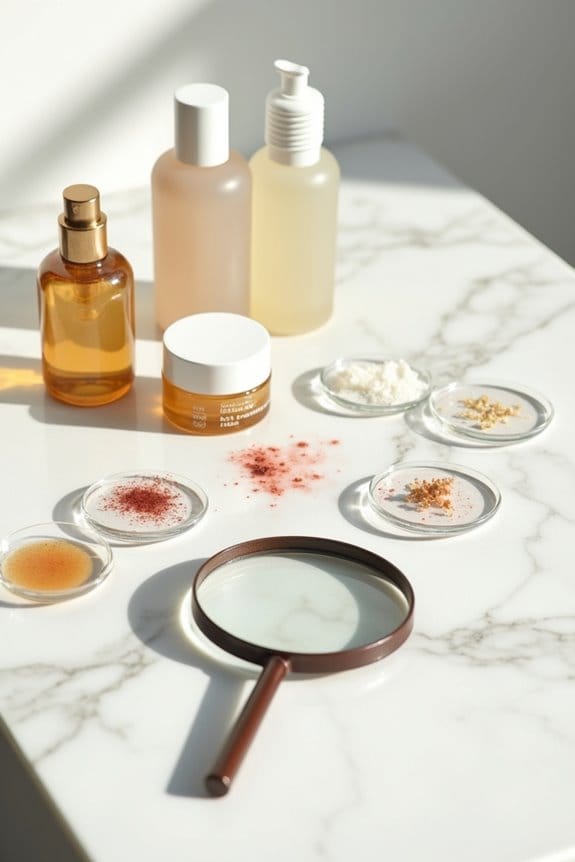
Since your beauty products can harbor hidden allergens, learning to decode ingredient labels is an essential skill for protecting your skin. When examining products labeled as “natural,” pay special attention to fragrance listings, which appear in over 36% of natural skin products and are a leading cause of reactions.
Don’t be fooled by botanical-sounding names. Common allergens like limonene and eugenol often hide in essential oils and plant extracts. You’ll want to scan ingredients lists for these compounds, especially if you’re allergic to certain fragrances. Remember, “natural” doesn’t automatically mean safer – over 94% of natural products contain at least one known allergen. Create a list of ingredients that trigger your sensitivities, and cross-reference it when shopping. This simple habit can save your skin from unwanted reactions.
Recommended Products

HOSPITALITY AND TRAVEL - Bergman Kelly hotel bulk amenities provides luxury products for all your needs: Motels, Airbnbs, Vacation Rentals, Inns, Bed & Breakfasts, Resorts, Airlines, Offices, Gyms, and more

USDA CERTIFIED ORGANIC: Made from a blend of organic herbs and oils traditionally used to soothe and moisturize dry skin, Earth Mama's Organic Nipple Butter is a USDA Certified Organic balm ideal for sore, cracked breastfeeding nipples. And it's the first lanolin-free nipple cream in the U.S.

MADE IN THE USA: Adopting practices and selecting products that emphasize the preservation of natural resources fosters a sustainable mindset. Here at Provence Beauty we don't compromise ingredients to save money. We are hands-on and will stay true to our ethos. Our products are designed, tested, and made in the United States.
Patch Testing and Safety Precautions
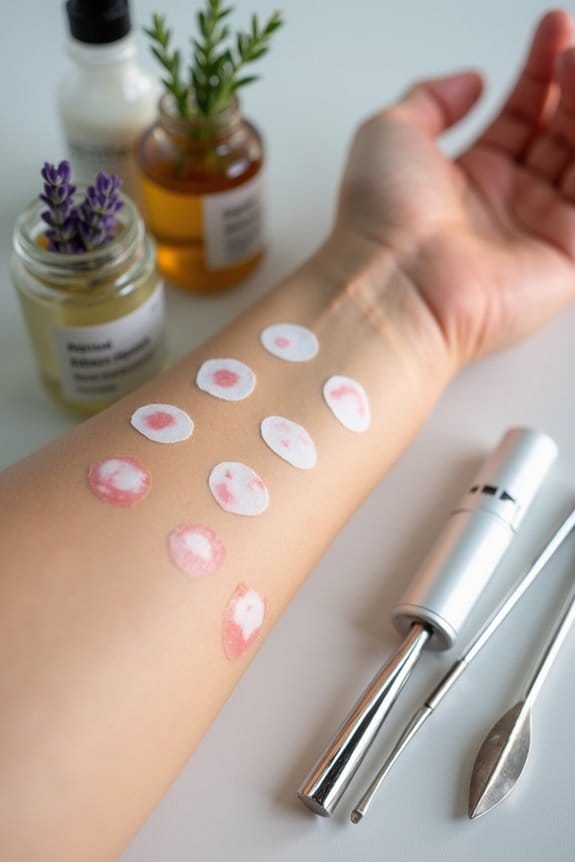
Now that you’re equipped to spot potential allergens, let’s put your products to the test – literally. Patch testing is your best defense against unexpected allergic reactions, especially when trying new natural products. Simply apply a small amount of the product on your inner arm and monitor the area for 48-72 hours before using it on your face.
Don’t skip this step, even with products labeled “natural” – they often contain specific ingredients like botanical extracts that can trigger skin sensitivities. If you’ve experienced reactions before, stick to hypoallergenic options and consider seeing a dermatologist for professional patch testing. They’ll help identify your unique triggers and recommend safer alternatives. Remember, what works for others might not work for you. Taking these precautions now can save you from uncomfortable reactions later.
Alternative Ingredients for Sensitive Skin
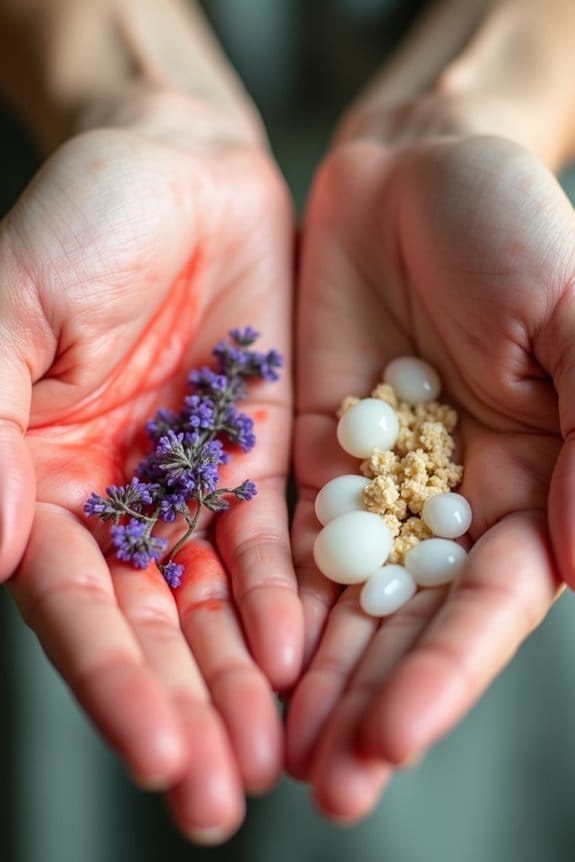
When it comes to sensitive skin, finding the right ingredients can feel like solving a complex puzzle. While many products claim to be “natural,” you’ll want to be selective about which botanical ingredients you choose. Not all natural means safe for sensitive skin.
You’ll find that mineral-based alternatives work better than their chemical counterparts, especially in sunscreens. For daily skincare, look for products containing gentle botanicals like aloe vera and calendula – they’re fantastic for moisturizing without triggering allergic reactions. But here’s the catch: even soothing-sounding ingredients like chamomile and lavender can cause sensitivity in some people.
Before trying new products, remember to patch test! It’s your best defense against potential reactions. And don’t be fooled by fancy labels – stick to fragrance-free and hypoallergenic options to keep your sensitive skin happy.
Recommended Products

Effortless Radiance: Hydrates, protects, and primes skin for a flawless, dewy glow; lightweight oil absorbs quickly, leaving a smooth canvas for makeup application; suitable for sensitive skin; hypoallergenic

10 ANTI-AGING BENEFITS: A deeply nourishing, rich cream featuring a potent blend of plant-based ingredients including Barley EGF, Beta Glucan, Niacinamide, Shea Butter, Hyaluronic Acid and Oridonin for firmer, brighter, smoother, hydrated, radiant and more youthful-looking skin. In-house studies showed clinically proven, visible results in 90 days.
Professional Guidance and Treatment Options
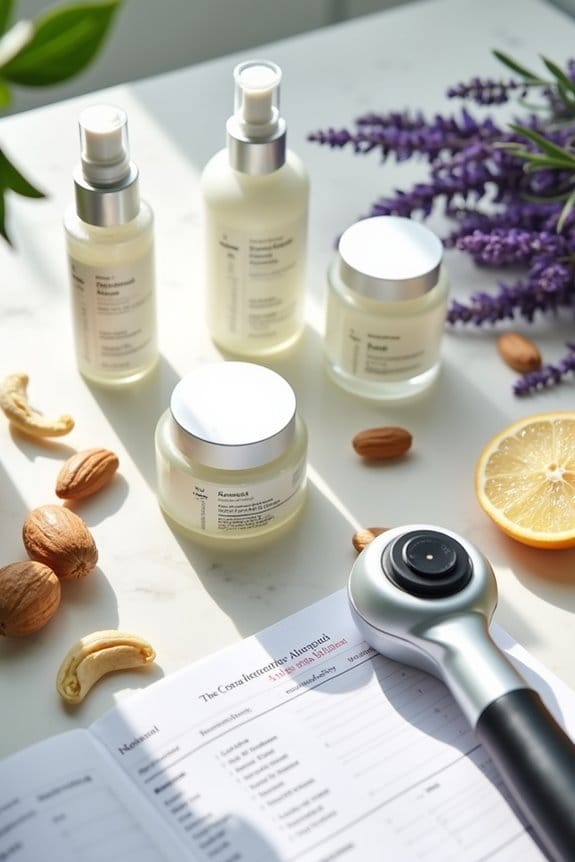
Taking care of sensitive skin often requires more than just careful product selection – sometimes you’ll need professional help to get to the root of your skin concerns. When you’re dealing with persistent skin concerns, consulting with a qualified clinician should be your first step. They can perform specialized tests to identify specific triggers and create tailored treatment strategies for your allergic reactions.
Your dermatologist will help you develop a thorough approach to managing skin allergies. This might include patch testing to pinpoint exact allergens, prescribing appropriate medications, and teaching you proper awareness of ingredient lists. Don’t hesitate to schedule regular follow-up appointments – they’re essential for tracking your progress and adjusting treatments as needed. Remember, what works for someone else might not work for you, which is why professional guidance is so valuable.
Frequently Asked Questions
What Are Common Allergies in Beauty Products?
You’ll find common allergies from synthetic additives and fragrances in beauty products. Always check ingredient labels and consider allergy testing to prevent skin irritation. Staying aware of product safety protects your skin health.
Can You Be Allergic to Natural Products?
Yes, you can definitely be allergic to natural ingredients. Your skin may react to essential oils and botanical extracts. Don’t assume natural means hypoallergenic – it’s important to check ingredients and patch test new products.
What Are the 26 Fragrance Allergens?
You’ll find the EU’s 26 labeled fragrance allergens include amyl cinnamal, benzyl alcohol, cinnamyl alcohol, citral, eugenol, hydroxycitronellal, isoeugenol, and limonene. Check product labels to avoid skin irritation if you’re sensitive.
Do Almost All Natural Skin Care Products Contain Contact Allergens?
Like a wolf in sheep’s clothing, natural skincare products aren’t always gentle. You’ll find that 94% contain contact allergens, despite organic claims. Don’t assume natural ingredient risks are lower – botanical allergies are surprisingly common.