As an Amazon Associate, we earn from qualifying purchases. Some links may be affiliate links at no extra cost to you. Although our opinions are based on curated research, we haven't used these products. Articles generated with AI.


10 Best Tips For Finding Perfect Foundation Undertone

To find your perfect foundation undertone, check your veins (blue/purple for cool, green for warm), test jewelry preferences (gold for warm, silver for cool), and use the white paper test to reveal natural coloring. Try foundation swatches in natural light, observe oxidation changes, and consider seasonal skin variations. Don't forget digital shade matching tools and professional color matching services. Mix multiple shades when needed, and always test on your jawline. There's so much more to discover about making the perfect match.
Key Takeaways
- Check your wrist veins in natural light – blue/purple indicates cool undertones, green suggests warm undertones, mixed colors mean neutral undertones.
- Test how gold and silver jewelry looks against your skin – gold flatters warm undertones, silver complements cool undertones.
- Place a white paper against your face to observe skin reflection – yellowish indicates warm, pink suggests cool, minimal contrast means neutral.
- Examine how your skin reacts to sun exposure – easy tanning suggests warm undertones, while quick burning indicates cool undertones.
- Review foundation labels for undertone indicators – "C" for cool, "W" for warm, "N" for neutral, matching these with your identified undertone.
Understanding Your Natural Undertone Through Vein Color
You may be interested


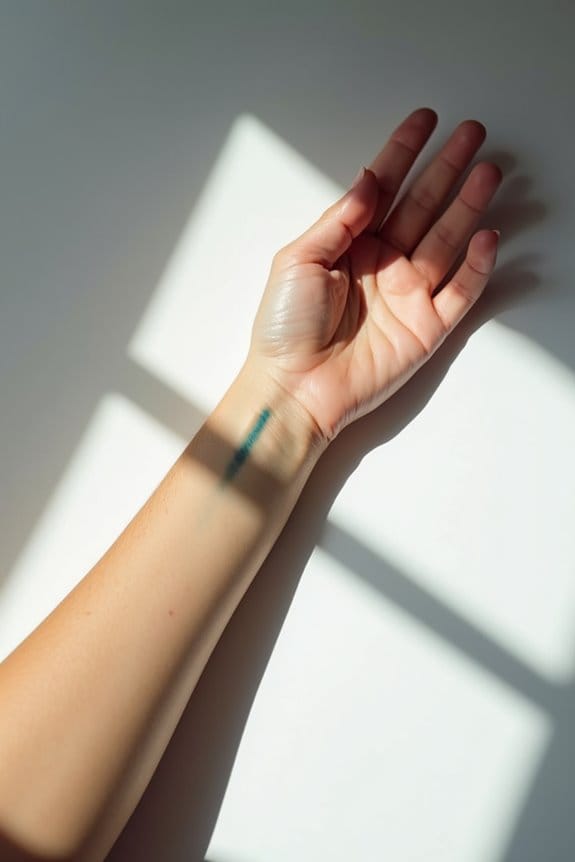
Ever wondered why finding the perfect foundation shade feels like solving a complex puzzle? One foolproof way to Find Your Foundation Match is by looking at your veins – it's like having a secret map to your skin type!
When you check your wrists, pay attention to how your veins appear. If they're blue or purple, you've got cool undertones, which means foundations with a pinkish base will be your perfect match. Green veins? That's a sign of warm undertones, so reach for those golden-based foundation shades. And if you're seeing a mix of both colors, congratulations – you've got neutral undertones, which means you've hit the jackpot! Your natural hue can work with a wider range of color match options. Knowing this simple trick can save you countless hours of foundation testing. Additionally, understanding undertones (cool, warm, neutral) is essential for selecting the perfect shade.
The Jewelry Test: Gold vs. Silver Preferences

How can a simple accessory choice reveal your perfect foundation match? The jewelry test is a quick and reliable way to determine your skin's undertones by observing how different metals complement your complexion. If you've noticed that gold jewelry makes your skin glow, you're likely warm-toned with golden or yellow undertones.
On the flip side, if silver jewelry enhances your features and you notice hints of blue or pink in your skin, you're probably cool-toned. Can't decide? You might have neutral undertones if both metals look equally flattering. To get the most accurate results, try this test in natural light – artificial lighting can skew your perception. Your personal preferences for jewelry often align naturally with your skin tone characteristics, making this method surprisingly accurate for foundation matching.
White Paper Test for Accurate Undertone Assessment
When you're struggling to pinpoint your perfect foundation match, a simple sheet of white paper might be your unexpected secret weapon. The white paper test is one of the most straightforward methods for skin assessment, helping you identify whether you have warm, cool, or neutral undertones.
Here's how to do it: Hold a pure white paper next to your face in natural daylight for the most accurate color representation. If your skin appears yellowish or golden, you've got warm undertones – perfect for foundation shades with peachy bases. Notice a pink or rosy tint? That means cool undertones. If you're not seeing much contrast against the paper, you likely have neutral undertones, making your complexion products more versatile. It's that simple! This quick test takes the guesswork out of choosing your ideal foundation match.
Natural Light Foundation Swatching Techniques
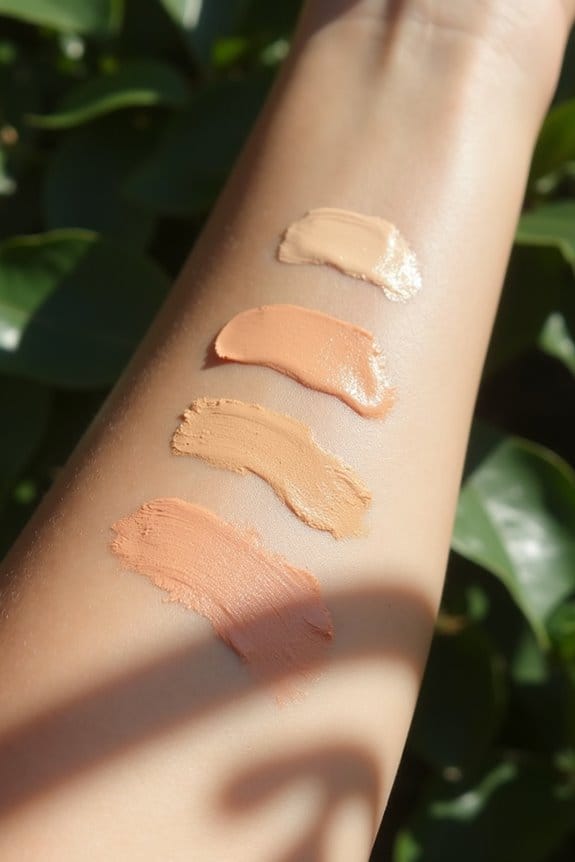
Three key factors make natural light foundation swatching an absolute game-changer for finding your perfect match. First, you'll want to apply multiple shades side by side on your jawline or upper chest where natural light hits directly. Second, give the foundation time to settle – oxidation can surprise you by shifting the color slightly. Third, blend each swatch thoroughly to see how it truly meshes with your skin tone.
Don't rush this process! You'll get the most accurate read on your undertones by checking the foundation swatches at different times throughout the day. A shade that looks perfect in morning light might tell a different story by afternoon. Pro tip: Keep a white piece of paper handy while you're swatching – it's a foolproof way to spot any undertone mismatches.
Seasonal Changes and Foundation Undertone Adjustments
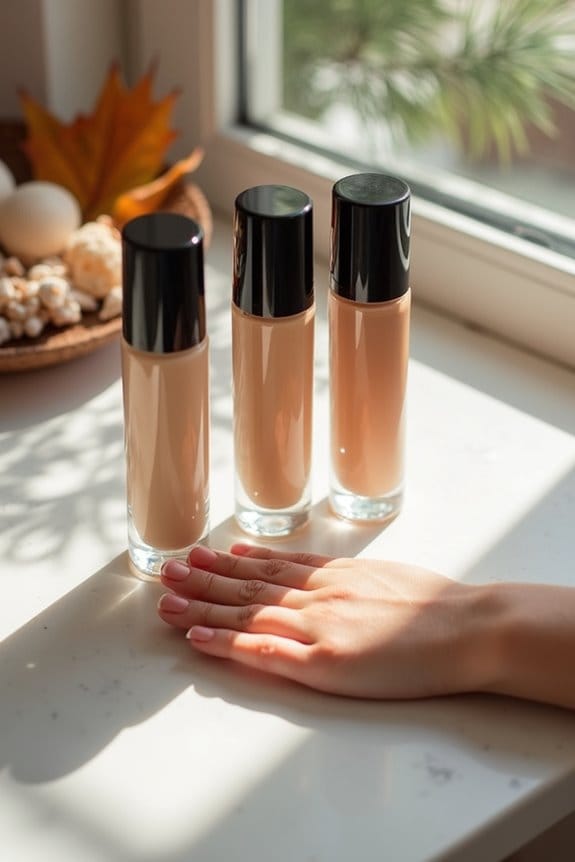
Natural light swatching is just the beginning of your foundation journey – you'll also need to factor in how the seasons affect your skin's undertone. Your complexion naturally shifts throughout the year, becoming warmer and deeper in summer, while taking on cooler, lighter tones during winter months.
To maintain a perfect match, you'll want to keep two foundation shades in your makeup arsenal. Your skin's reactions to seasonal changes can really throw off your usual shade – trust me, we've all had that "why does my foundation look off?" moment! Watch how your skin responds to humidity and dryness, as these factors can affect how foundation sits on your skin. Make it a habit to reassess your foundation undertone every few months, especially after periods of sun exposure. Regular adjustment and maintenance are key to flawless foundation year-round.
Analyzing Foundation Labels and Color Codes

Decoding foundation labels might seem like cracking a secret code at first, but once you know what to look for, it's actually pretty straightforward. When you're searching for foundation shades that match your skin, pay attention to those helpful letters: "C" for cool undertone, "W" for warm undertone, and "N" for neutral.
Most brands, like L'Oréal Paris Infallible, use a combination of numbers and descriptive names to help you match foundation perfectly. Lower numbers typically indicate lighter shades, while higher numbers show greater depth of color. Watch for those telling shade names too – "Porcelain" usually suggests a cool undertone, while "Golden" points to warm. The undertone descriptions and color codes on the back label are your best friends here. Understanding the shade range system will save you time and help you zero in on your perfect match.
Recommended Products

Real Human Hair: Made from real human hair with a smooth, soft texture. Designed to blend naturally with your own hair and add volume. Suitable for washing, trimming, blow-drying, straightening, or curling (recommended below 357°F).

🍑 POWERED BY PEACHSKIN PERFORMANCE FABRIC - Breathable, moisture-wicking, and temperature-regulating for cooler, more restful sleep. Exceptional softness that lasts wash after wash. PeachSkinSheets are crafted from ultra-fine microdenier performance microfiber to keep hot sleepers cool, dry, and comfortable all night.

Digital Shade Matching Technology and Tools
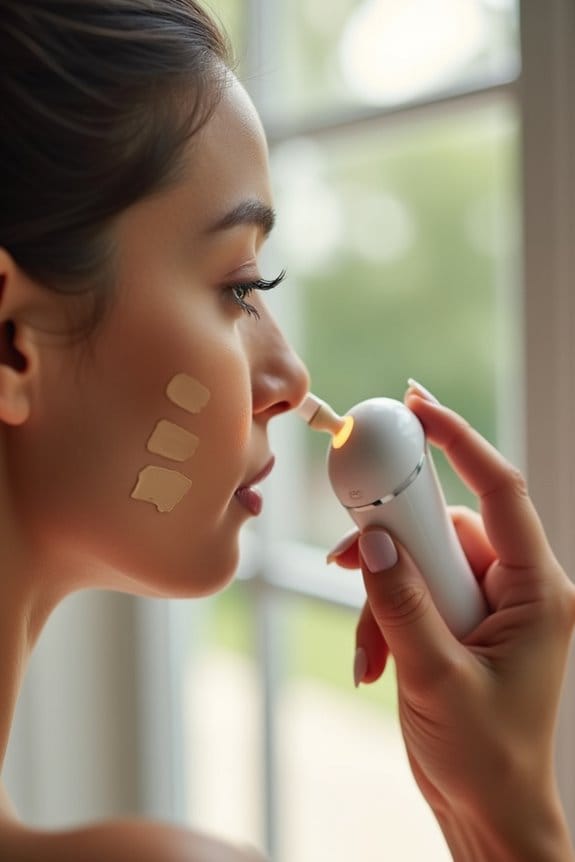
Modern technology has revolutionized the way we find our perfect foundation match. Digital shade matching technology now lets you snap selfies or record quick videos to analyze your skin tone and undertones with incredible accuracy. These smart tools use advanced algorithms to provide personalized foundation recommendations that work for your unique complexion.
You'll love how virtual try-on tools and augmented reality apps let you experiment with different foundation shades right from your phone. No more guessing games at the makeup counter! Take advantage of online shade quizzes that factor in your skin type and preferences while considering various lighting conditions. The best part? These digital tools help you find your ideal foundation match without leaving home. They're like having a personal makeup artist in your pocket.
Recommended Products

INSTALL WITH NEW CONSTRUCTION: Lugged design provides anchoring tabs to install into newly tiled shower walls for a flush fit. Please refer to our shower shelf installation guide for more details
INSTALL WITH NEW CONSTRUCTION: Lugged design provides anchoring tabs to install into newly tiled shower walls for a flush fit. Please refer to our shower shelf installation guide for more details
Foundation Oxidation and Undertone Changes
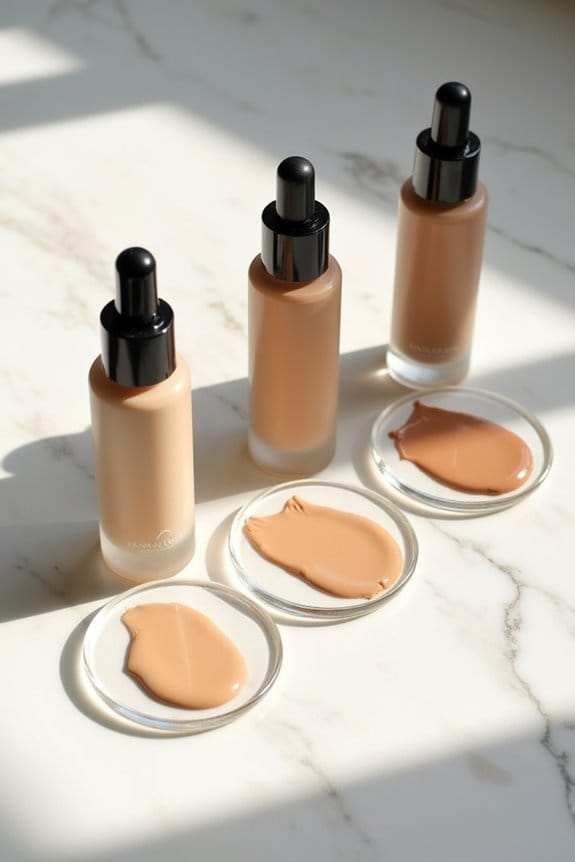
While you might think you've found your perfect foundation match at first swatch, the tricky phenomenon of oxidation can throw a wrench in your makeup game. Foundation oxidation can cause your carefully selected shade to darken by 2-3 shades within just 4 hours, dramatically affecting your color match and undertone harmony.
Your skin type and pH levels play a major role in how much your foundation will change throughout the day. To outsmart these sneaky undertone changes, always test foundations in natural light and give them time to settle on your skin. Look for formulas that specifically resist oxidizing, and don't be afraid to go a shade lighter than you think you need. Remember, environmental conditions can affect how your foundation performs, so what works in winter might not be true to undertone in summer. Consider opting for lightweight formulas that deliver full coverage without feeling heavy, as they may be less prone to oxidation.
Professional Color Matching Services and Tips
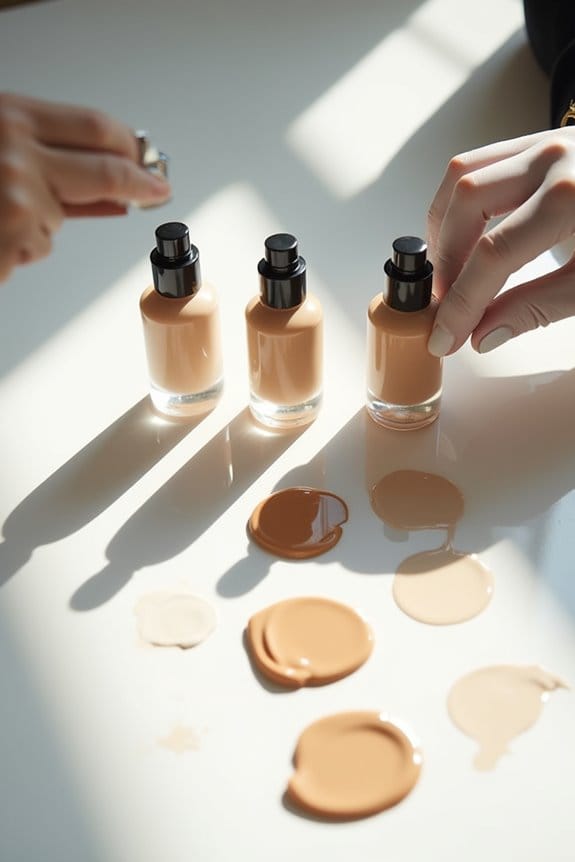
Taking the guesswork out of foundation matching doesn't have to be a solo mission. Professional color matching services are widely available at beauty counters, where expert techniques help determine whether you've got cool and warm undertones. They'll perform tests like the vein test to get your perfect match right.
Don't want to leave your house? Virtual shade matching tools are changing the game. Simply snap a selfie, and advanced technology will analyze your skin tones to recommend ideal foundation shades. If you prefer in-person help, personalized consultations let you try multiple swatches along your jawline for a real-world foundation match. These experts can also guide you through seasonal changes in your complexion, ensuring you're covered year-round. It's like having a beauty bestie who really knows their stuff!
Recommended Products

BUILT TOUGH FOR BUSY HOMES: Crafted from durable 100% polypropylene with sturdy jute backing, this rug is designed to withstand the rigors of everyday life, making it ideal for families with kids and pets; OEKO-TEX certified for safety and peace of mind

Flawless airbrush makeup foundation .25oz quad pack with 4 bonus shades for ultimate mixing & matching

Heavy-duty sun shade poles :Our sail shade poles for ground are precision machined from solid steel. They are 2.4 inches in diameter and 2mm thick. They consist of three connecting sections and total 10 feet in length. The fixed base is equipped with four M16 expansion screws to provide a strong grip and ensure that the shade sail pole is firmly installed, providing you with reliable protection from the sun on hot summer days.
Multiple Foundation Shade Blending Techniques
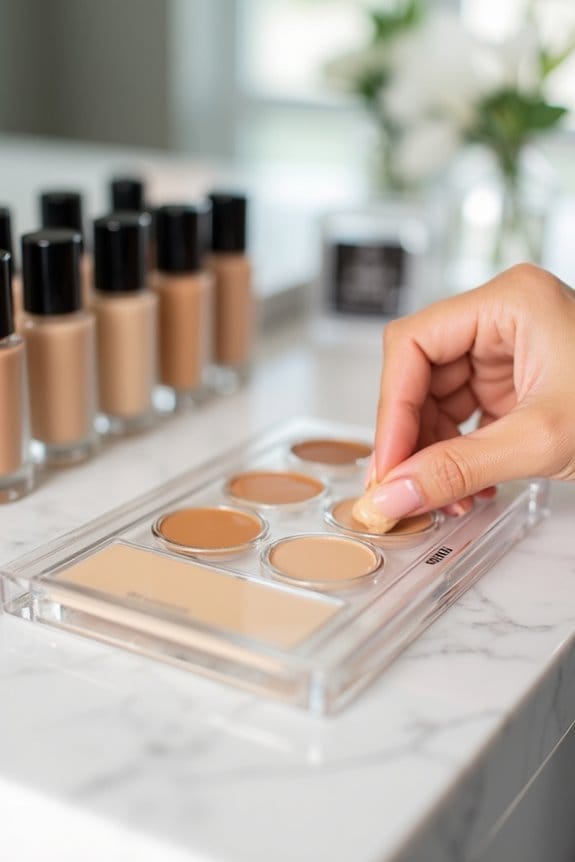
Anyone who's struggled with foundation knows that one shade doesn't always cut it. To find infallible foundation shades that truly match your skin, you'll need to master blending different shades. Start by identifying whether you lean cool or warm in undertone – this is vital for a seamless match.
Mix your foundation formula on the back of your hand, using small amounts to build coverage gradually. Don't rush this process! Blend thoroughly and test under natural light to guarantee you've nailed the color match. Remember that seasonal changes affect your skin tone, so you might need separate blending techniques for summer and winter. Keep your mixed shades in a separate container for quick touch-ups. When done right, your blended foundation should look like your skin – just better!
Recommended Products

VIBRANT YET VERSATILE Kaleidoscopic medallion pattern delivers bold, kid-approved color in a tastefully muted palette that blends with nursery pastels or grown-up neutrals.

Finding inspiration from gazing up at the stars, a Gabriel design offers a sense of intrigue and wonderment that you won’t find elsewhere

32 wells, one large mixing area, and a large plastic dust cover for additional mixing and better storage
Frequently Asked Questions
How Do I Find My Undertones and Choose the Right Foundation?
Check your undertone identification by examining skin tone in natural lighting effects: look at veins, test foundation swatches, and try jewelry. Your warm, cool, or neutral tones will guide makeup application year-round.
How to Find the Perfect Foundation Shade?
Test foundation swatches on your jawline in natural lighting, consider your skin type and seasonal changes, and use online shade matching tools. Don't forget to check undertones and verify the formula works with your skincare routine.
How Do I Find My True Match Foundation Color?
Check your veins for undertones, swatch foundations on your jawline, and test in natural light. Consider seasonal changes and skin type. You'll find your match by comparing multiple brands and letting shades settle.
Is It Better to Go Slightly Lighter or Darker With Foundation?
You shouldn't go lighter or darker – match your exact skin tone instead. Foundation shades should seamlessly blend with your natural undertone for the most flattering look. Test swatches in natural light for perfect matching.